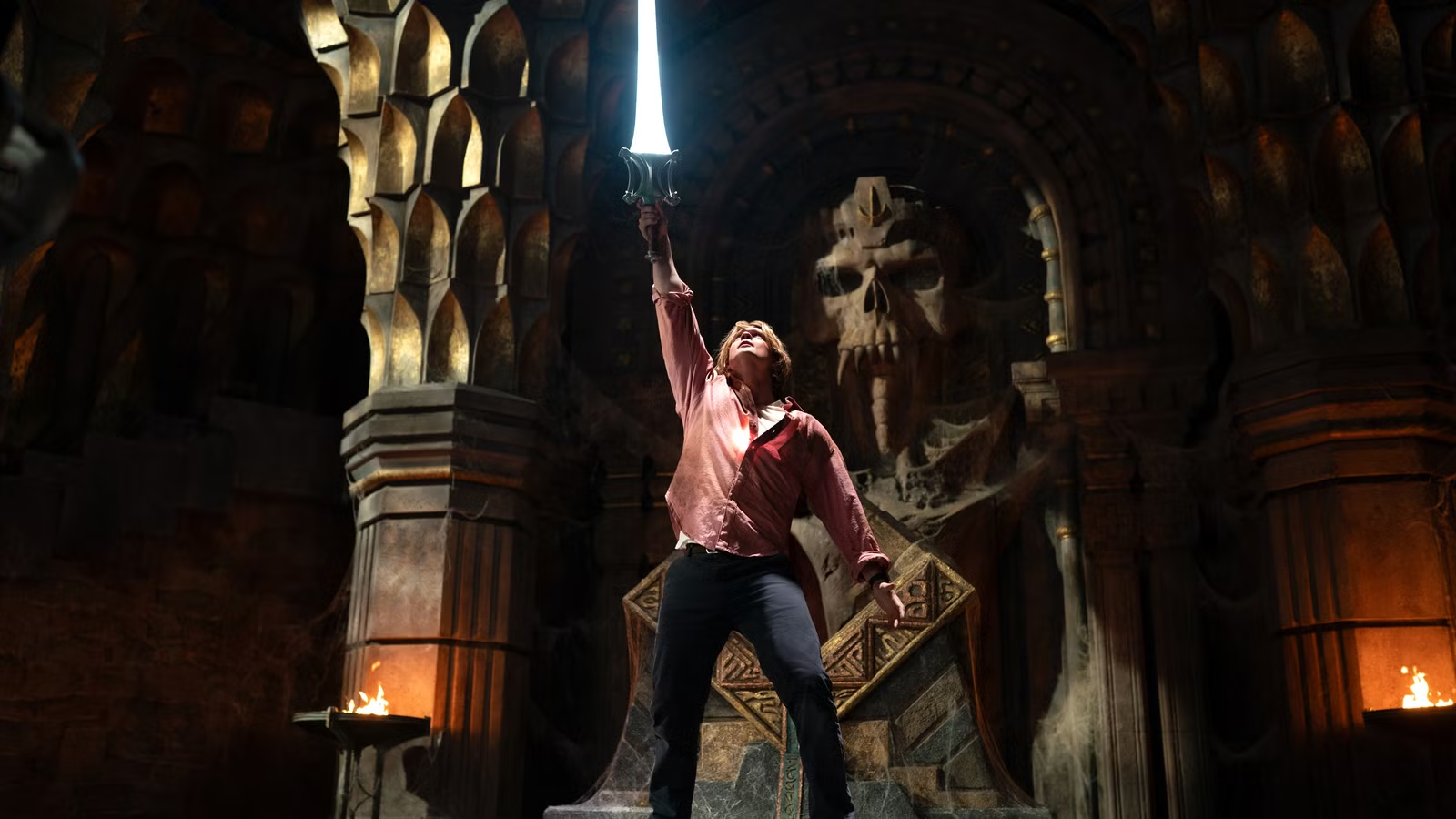
Amazon MGM’s domestic distribution chief Kevin Wilson called a $54.3 million worldwide opening for a film that cost nearly $200 million “exactly the kind of critical first moment that validates our holistic distribution strategy.” That is the language every studio reaches for when a tentpole misses. It is also, at Amazon, a fairly literal description of how the business works. Masters of the Universe is failing in theaters by every conventional measure. But Amazon is the one studio whose parent company can convert a theatrical shortfall into ad inventory, subscriber retention, and retail traffic, none of which it ever has to report. In theaters, Masters of the Universe (2026) is a box office flop, but the Amazon ‘machine’ is built in a way that the company will be able to absorb it. The sharper question is what “happy” costs the partners who don’t own the machine, Mattel, above all.

A bomb by every theatrical measure
The theatrical numbers are hard to avoid. Masters of the Universe opened June 5 to $29.3 million domestic and about $25 million from international markets, a $54.3 million worldwide start against a production budget reported between $170 million and $200 million before marketing, according to Variety. By its first Wednesday, the running total stood near $62 million worldwide, per The Numbers. The industry’s rough breakeven convention (about two and a half times production cost to cover marketing and theaters’ share of the ticket) would put the target near half a billion dollars. Nothing in the film’s trajectory points towards breaking even.
The composition of the audience purchasing tickets is worse than its number. Opening-weekend audience data showed only 5% of ticket buyers were under 12 and 6% were 13 to 17, while 29% were 45 to 54, the cohort that owned the toys in the 1980s. A four-quadrant fantasy tentpole drew one quadrant: nostalgic adults. Critics were lukewarm (67% on Rotten Tomatoes, 51 on Metacritic), but paying audiences liked the film: a B CinemaScore and an 88% Rotten Tomatoes audience score. That gap is the single data point in Amazon’s favor.
What “holistic” describes in practice:
Travis Knight and the entire cast and filmmaking team have delivered something truly special, and this opening is exactly the kind of critical first moment that validates our holistic distribution strategy — building awareness and engagement that will carry well beyond the theatrical window.
Kevin Wilson, head of domestic distribution, Amazon MGM Studios, in a statement to Variety
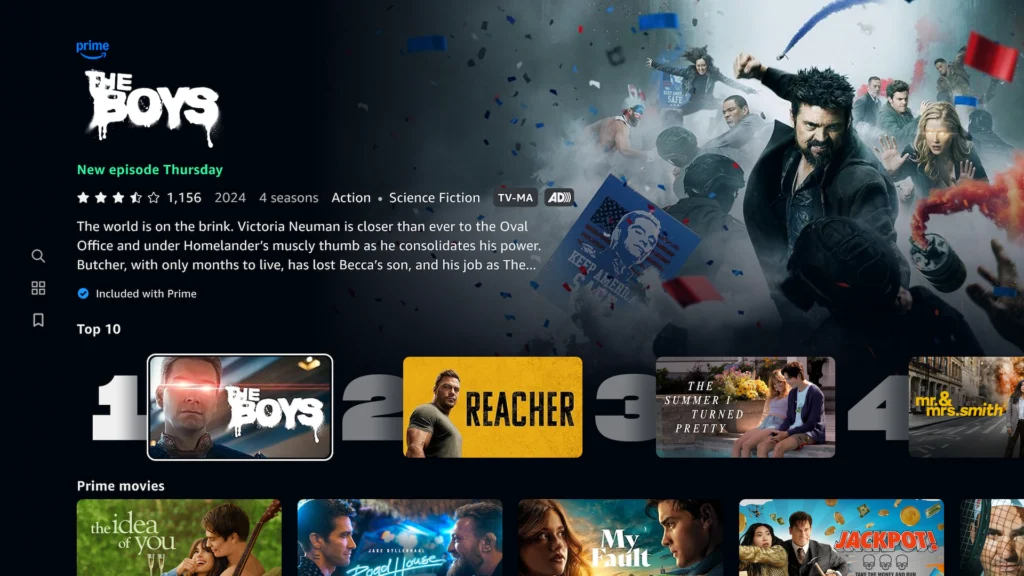
Strip the varnish, and an interesting model sits underneath. The theatrical release functions as the primary marketing campaign a streaming title can get: months of trailers, a Hollywood premiere, talent press tours, and paid media, building recognition that outlives the theatrical window. The run itself returns some revenue, whatever the multiple. Then comes a second, cheaper marketing beat when the film lands on Prime Video, where it stops needing to sell tickets and starts serving ads. Amazon’s ad-supported tier reached 315 million monthly viewers globally as of late 2025, per Marketing Week, an audience no opening weekend can touch. Behind that sit the effects Amazon has always priced into Prime and never itemized: retention, engagement hours, and the storefront a viewer is sitting inside while they watch.
None of that makes the film profitable, and the distinction matters. What the model changes is what a loss is. For Disney or Warner Bros., a $200 million theatrical miss is a writedown with a press cycle attached. For Amazon, part of it converts into inputs the company values and does not disclose. The 88% audience score suggests a title that can earn a healthy streaming afterlife with viewers who never bought a ticket. Whether that afterlife is worth nine figures is a separate question.

The Rings of Power yardstick
Measured against Amazon’s own spending, the exposure shrinks further. The company paid the Tolkien estate $250 million for The Rings of Power before shooting a frame; season 1 cost about $465 million, and the five-season commitment has been reported at more than $1 billion. That spending bought a series with no box office at all, justified entirely by the same holistic arithmetic of acquisition and engagement. Masters of the Universe‘s entire production budget is well under a third of one season of Rings of Power plus rights. Amazon also promised theater owners at CinemaCon it will reach 15 wide releases a year by 2027, with reported theatrical spending around $1 billion annually. Inside that portfolio, He-Man is one line item in year one of a strategy the company says it will measure over decades. A balance sheet that absorbed The Rings of Power does not blink at this.
The case for calling it spin anyway
The strongest counterargument deserves a fair hearing: this is what every studio says about every bomb, and Amazon’s version is unfalsifiable by design. Amazon publishes no per-title streaming revenue, no ad rates, and no retention attribution; “awareness and engagement that will carry well beyond the theatrical window” can never be checked from outside. The ad math is also unforgiving as a recovery mechanism: streaming ad revenue accrues across an entire catalog, and no plausible single-title share of even a multibillion-dollar ad business claws back a nine-figure net loss. And Amazon has an immediate incentive to talk this way: it has spent two consecutive CinemaCons courting exhibitors, and “our flop was secretly fine” is a message aimed at theater owners and talent as much as at the press. Stated honestly, Amazon’s position is closer to “we can afford for this not to work” than to “this worked,” and the studio chose the more flattering version.
Where the risk actually sits
Sony’s exposure is the smallest of the three. Sony Pictures Releasing International is handling the film outside North America, distribution-for-fee work that pays largely irrespective of performance. Sony held the property’s film rights from 2009 before the project migrated to Netflix, which wrote off a reported $30 million in development when it cancelled the film in 2023, and then to Amazon. Sony’s current position is service provider, not investor.
Mattel is the opposite case. The toymaker’s film arm co-produced, and the company launched a global product program in April: kids’ and collector figure lines, building sets, a publishing slate and collaborations with more than 70 licensing partners, all timed to the film. Toy lines are sold into retail months in advance; shelf space committed against a hit is committed either way. The audience data cuts directly against that bet: 11% of the opening-weekend audience was under 18. A film can recover on streaming. A toy line needs children in year one. Mattel’s post-Barbie thesis, that its catalog is a film slate, needed Masters of the Universe to prove Barbie was repeatable, and the theatrical result argues the other way. Amazon’s holistic ledger has line items Mattel cannot access the following: no ad tier, no subscription, and no storefront. The opening weekend Amazon can plausibly shrug off is close to the worst case for the partner that built a retail program on it.
A new product, or new loss accounting
Taken at face value, Wilson’s statement describes something real: a film product with multiple revenue access points (theatrical, then ad-supported streaming, then the ambient Prime flywheel) in which the theatrical window doubles as marketing for the windows behind it. What it does not describe is a film that made money. The evidence supports a narrower conclusion: Masters of the Universe failed in theaters; Amazon’s model makes that failure survivable and largely invisible; and the studio’s stated happiness can be neither proven nor disproven from outside. The behavioral tells will say more than any statement: how hard Amazon markets the Prime Video debut, whether a sequel moves forward, and whether Mattel’s product program gets a second year. If Eternia quietly ends here, “holistic” will have meant what it usually means: a soft landing for a hard number.

Comments