

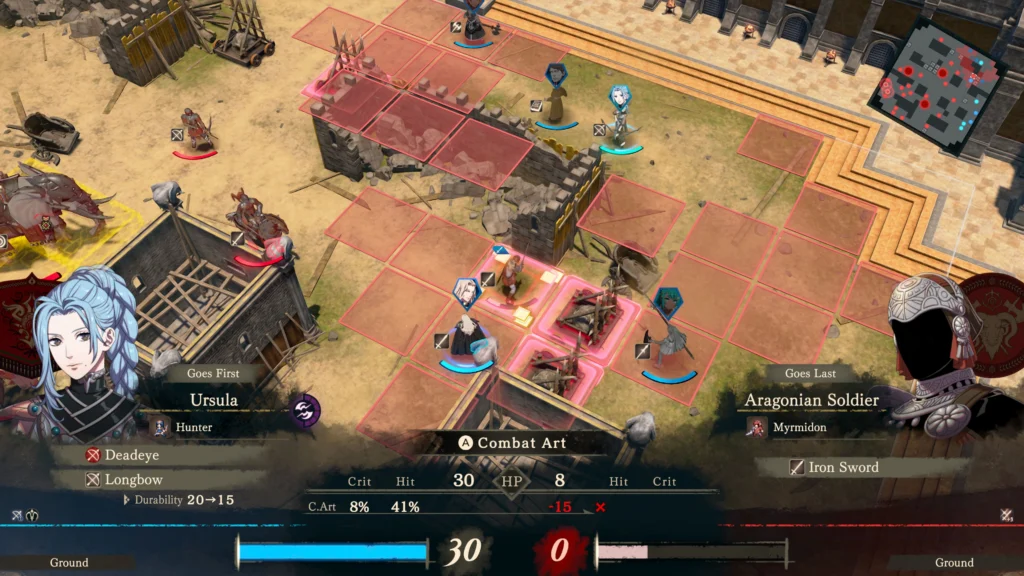
Fire Emblem: Fortune’s Weave arrives September 17, 2026, with a price no entry in the series has carried: $79.99 for the physical edition, a tier Nintendo had so far reserved for Mario Kart World.
Nintendo confirmed the pricing alongside the release date at the Nintendo Direct on June 9. The digital edition costs $69.99, a split its dual-pricing policy prescribes, and a $119.99 collector’s edition called the Dagdan Collection includes a steelbook, a 200-page artbook, character art cards, and a map of the land of Dagda.
Routine inflation does not explain the number. Nothing else in Nintendo’s 2026 slate is priced this way, and the likeliest read is that Nintendo has decided Fire Emblem can sell at a flagship rate. The first 48 hours of preorders did little to argue otherwise.
A Price Nintendo Saves for Its Biggest Game
When Nintendo formalized split pricing in May, the company framed the change as a digital discount rather than a physical increase. “The cost of physical games is not going up,” its official explainer stated.
Every first-party title announced or shipped since then has cost $70 or less in a box, a pattern Kotaku flagged when the new price emerged. Yoshi and the Mysterious Book, for example, sells for $59.99 digital and $69.99 physical, which preserves Switch-era pricing for buyers willing to skip the cartridge.
Fortune’s Weave is the exception. Among brand-new games, only Mario Kart World, the launch title that sells the console itself, carries the same $79.99 physical price. The Switch 2 Edition of The Legend of Zelda: Tears of the Kingdom also reaches $80, though as a re-release of a 2023 game. Counting new releases only, Fortune’s Weave is the second Nintendo game at that price point and the first to arrive there since the company said physical prices were holding still.
The Three Houses Math
Fans across the internet have reacted immediately with comparisons. Fire Emblem: Three Houses launched in July 2019 at $59.99 and shipped 4.12 million copies through the end of 2022, according to Nintendo’s figures. It is the best-selling strategy RPG ever made and the commercial ceiling of this franchise.
Seven years later, the next mainline entry will cost 33% more. The $59.99 standard had held through 2023’s Fire Emblem Engage.
- Fire Emblem: Three Houses (2019): $59.99; 4.12 million shipped through December 2022
- Fire Emblem Engage (2023): $59.99; 1.61 million shipped through March 2023
- Fire Emblem: Fortune’s Weave (2026): $79.99 physical, $69.99 digital
Digital buyers get a gentler climb. Ten dollars over seven years sits below inflation, but Fire Emblem’s audience skews toward the collectors who buy boxes.
What the price signals matters more than the price itself. Mario Kart World sells consoles; Three Houses, at its commercial peak, sold four million copies to a devoted audience. On the evidence of the sticker alone, Nintendo now expects this series to perform in the first category.
Flipped for Double Before Release
The preorder market, so far, supports this market intuition, at least when we look through the eyes of the collector’s market. The Dagdan Collection sold out at the UK My Nintendo Store on announcement day, and GamesRadar reported the edition selling out quickly across retailers. By Wednesday, June 7, the deal tracker Nintendeal told followers preorders were “sold out everywhere except Target,” with Walmart stock “flickering in and out.” The Target exception has a footnote of its own: as the gaming channel PlayerEssence noted, many Target listings ship after the September 17 release date, which is why buyers are leaving them for last.
Supply has wobbled rather than vanished. Best Buy’s listing currently shows a buttonless “Coming Soon.” GameStop’s page showed an active preorder button Thursday, a restock Nintendeal flagged within the hour while calling the edition sold out everywhere else.
Resellers moved faster than the restocks. Completed eBay sales show 20 Dagdan Collection preorder flips between June 9 and June 11, ranging from $194 to $370, with a median just under $240. The median buyer paid roughly double the $119.99 retail price for someone else’s preorder confirmation for an item that does not ship until September. The five highest sales each cleared $300.
What the Bet Tells Us
Preorder scarcity is a weak signal on its own. Nintendo has not disclosed allocation sizes; a conservative print run can make any collector’s edition look like a phenomenon, and a restock wave before launch would turn this week’s $370 flip into a $119.99 shelf item. Scalper prices measure impatience, not demand at scale.
The price, though, was set before any of that. Nintendo committed to the flagship tier before the first preorder went live, which makes the sellouts corroborating evidence rather than the cause.
Premium pricing used to be something a franchise earned after proving it could sell. Fortune’s Weave is being billed like a flagship on spec. The number to watch is September sell-through on the standard $80 edition: if that holds, the $70 Nintendo game becomes the exception rather than the rule, and a strategy series that peaked at four million copies will have set the precedent.

Comments